One theory gaining ground links a more-common-than-previously-thought immune disorder called Mast Cell Activation Syndrome (MCAS) with severe COVID-19. Learn more about the theory on the kare11.com site: read more…

One theory gaining ground links a more-common-than-previously-thought immune disorder called Mast Cell Activation Syndrome (MCAS) with severe COVID-19. Learn more about the theory on the kare11.com site: read more…

Tuberculosis (TB) caused by Mycobacterium tuberculosis (Mtb), remains one of the deadliest bacterial infections worldwide. This study investigates the location and characteristics of MCs in TB lesions to assess their contribution to TB pathology. Read this research on nature.com…

2nd Biennial Meeting Virtual Conference was this past May, 2021. If you missed it, you can see all of the presentations here…
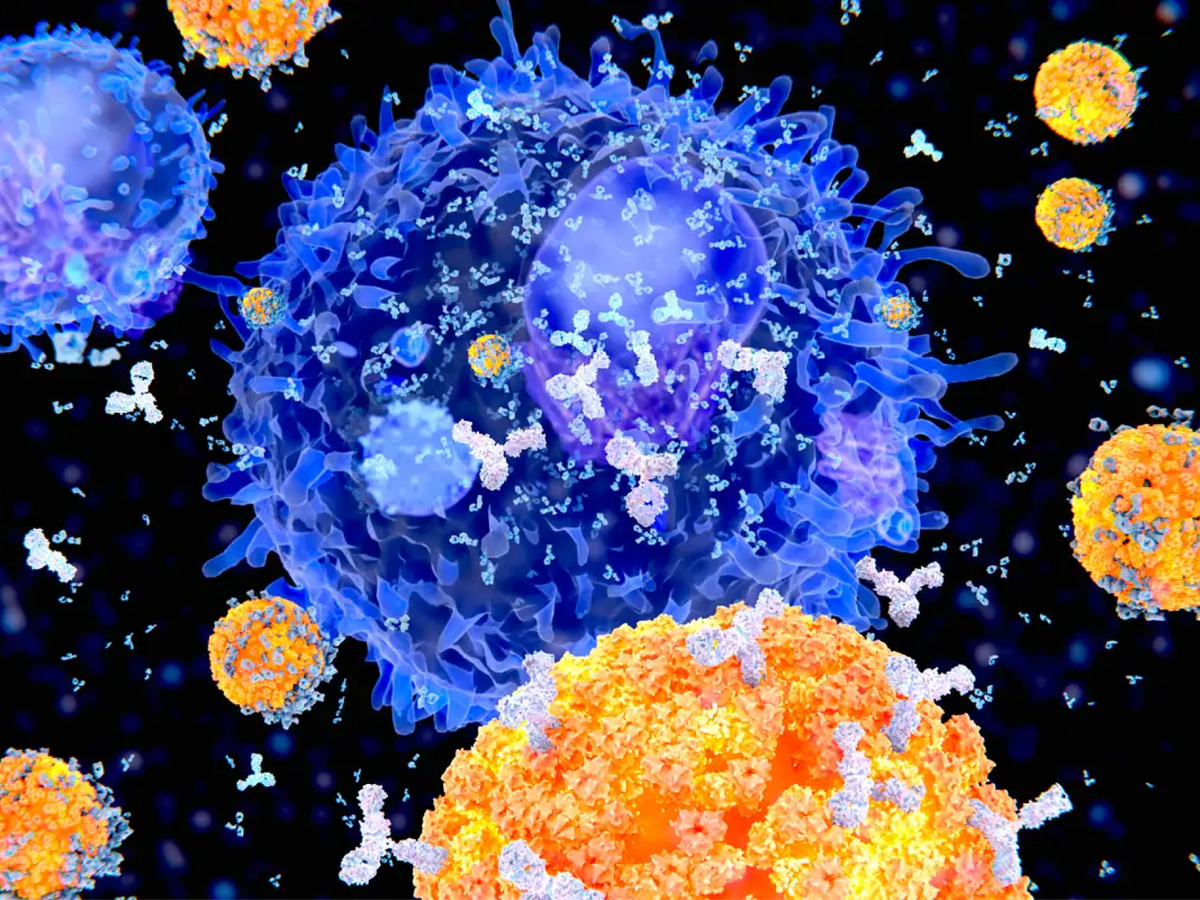
Informative article discussing a preprint research paper on the News Medical Life Sciences website discusses the possibility of mast cells being major culprits in the etiology of severe and critical COVID-19. Read more…

Check out the latest research and findings from the ICA concerning the relationship between mast cells and pain conditions such as interstitial cystitis/bladder pain syndrome (IC/BPS)
Long COVID or post-COVID “long haulers” is the condition when people who suffered from COVID and no longer the virus is detected in the body still have symptoms. As described by the article of Dr. Anthony Komaroff, MD, in late 2020, the most common symptoms are fatigue, body aches, shortness of breath, difficulty concentrating (brain fog), inability to exercise, headache, and difficulty sleeping.
Even though there is no formal or scientific definition of the long COVID, various studies describe the persistent COVID-related symptoms (DOI: 10.1001/jama.2020.12603 | DOI: 10.15585/mmwr.mm6930e1). With the worldwide vaccination rollout and the subsequent reduction in the SARS-CoV-2 transmission, one of the future concerns will be how to treat patients with long COVID-19.
The brain fog, one of the most incapacitating post-COVID symptom, and described by Dr. Theoharides, its pathogenesis is unclear but may involve neuroinflammation via mast cells stimulated by pathogenic and stress stimuli to release mediators that activate microglia and lead to inflammation in the hypothalamus.
A recent publication from Dr. Theoharis C Theoharides, a world-class researcher in this field, explains that luteolin could help fight the effects of this presentation of the disease. This publication review how some symptoms, especially those related to neuroinflammation, could be mitigated by the phytosomal formulation of this natural flavonoid.
One of the scopes of MCRI is to support the identification, development, and use of second-use drugs or compounds for mast cell-related diseases.
Links:
https://www.health.harvard.edu/blog/the-tragedy-of-the-post-covid-long-haulers-2020101521173
https://pubmed.ncbi.nlm.nih.gov/32644129/
https://www.ncbi.nlm.nih.gov/pmc/articles/PMC7392393/https://iubmb.onlinelibrary.wiley.com/doi/epdf/10.1002/biof.1726

Current evidence from clinical and laboratory studies confirms that mast cells play a central role in the pathogenesis and pathophysiology of interstitial cystitis (IC). In this article, we focus on the role of the mast cell in IC and examine the ways in which mast cells and other pathophysiologic mechanisms are interrelated in this disease. Identifying the patients with IC who have mast cell proliferation and activation will enable us to address this aspect of disease pathophysiology in these individuals with targeted pharmacotherapy to inhibit mast cell activation and mediator release. Read more…



Last year during Spring, a middle-aged man planned to visit the Brigham and Women’s Hospital in Boston due to a coronavirus infection. The doctor treated him with steroids and discharged him five days later. However, that infection never left, instead, lingering in his body for 154 days.
Interestingly, due to this man’s case, scientists have been able to discover new coronavirus variant developments, such as where it emerged and why it’s been infecting at rapid speeds on three different continents.
Infectious disease doctor Jonathan Li at Harvard Medical School, one of the many who helped treat the infected man comments in surprise, saying “he was readmitted to the hospital several times over the subsequent five months for recurrence of his COVID-19 infection and severe pneumonia…so this is an extraordinary individual.”
He was extraordinary in the sense that the man wasn’t what doctors call a “long hauler” (which is someone who clears a coronavirus infection but then keeps the health problem for months). Instead, doctors found he had the virus growing and thriving in his body for five months until it eventually died.
“That is one of the remarkable aspects of this case,” Li says. “In fact, he was highly infectious even five months after the initial diagnosis.”
What was intriguing is that he had a severe autoimmune disease, one that required drugs that decrease the functioning of the immune system, so his body couldn’t fight off COVID-19 infection as well as most. This led to a back and forth between his body and the coronavirus infection, with him getting better and then suddenly falling ill once more. A culmination of this led to him going to the intensive care unit and eventually dying five months after the initial diagnosis.
While he was alive, however, the doctors that were treating him (including Jonathan Li), ran an illuminating experiment– every few weeks, the team would take coronavirus from the man’s body and sequence the virus’s genome. This revealed that the virus was changing quickly in his body, not just picking one or two mutations at once, but instead acquiring a whole cluster of 20+ mutations. This would reveal to be SARS-CoV-2, the virus that causes COVID-19, but with the addition that it was rapidly mutating. This rapid mutation allowed the virus to bypass detection by the antibodies. These findings were published in early November 2020 in The New England Journal of Medicine.
“Toward the very end of his life, he was treated with monoclonal antibodies, from Regeneron,” Li says. “And shortly thereafter, we saw evidence that suggested the virus was developing resistance or escaping from these antibodies as well.”
Researchers, with this data, found that the genes of these variants looked eerily similar to variants found in the U.K. as well as South Africa. They weren’t exactly the same, but they both had ~20 mutations, including several key mutations (N501Y and E484K) that were known to help viruses avoid antibody detection. This has led scientists to think that these two phenomena could be related.
Normally these patients are isolated, and their infection doesn’t spread, but every so often it spreads and a new stage of the pandemic occurs. With new variants mutating every day, a solution needs to be developed, and fast.