One theory gaining ground links a more-common-than-previously-thought immune disorder called Mast Cell Activation Syndrome (MCAS) with severe COVID-19. Learn more about the theory on the kare11.com site: read more…

One theory gaining ground links a more-common-than-previously-thought immune disorder called Mast Cell Activation Syndrome (MCAS) with severe COVID-19. Learn more about the theory on the kare11.com site: read more…

Tuberculosis (TB) caused by Mycobacterium tuberculosis (Mtb), remains one of the deadliest bacterial infections worldwide. This study investigates the location and characteristics of MCs in TB lesions to assess their contribution to TB pathology. Read this research on nature.com…

2nd Biennial Meeting Virtual Conference was this past May, 2021. If you missed it, you can see all of the presentations here…
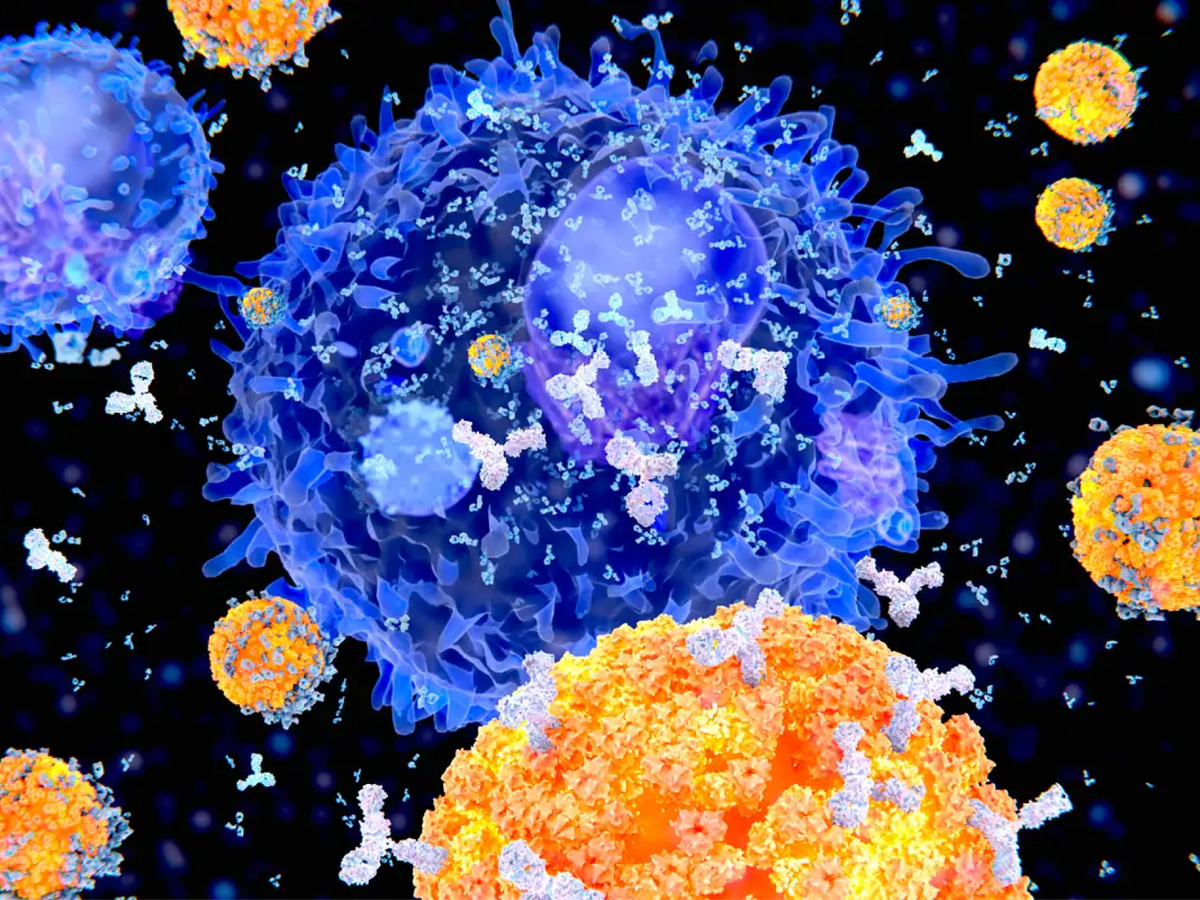
Informative article discussing a preprint research paper on the News Medical Life Sciences website discusses the possibility of mast cells being major culprits in the etiology of severe and critical COVID-19. Read more…

Check out the latest research and findings from the ICA concerning the relationship between mast cells and pain conditions such as interstitial cystitis/bladder pain syndrome (IC/BPS)
Long COVID or post-COVID “long haulers” is the condition when people who suffered from COVID and no longer the virus is detected in the body still have symptoms. As described by the article of Dr. Anthony Komaroff, MD, in late 2020, the most common symptoms are fatigue, body aches, shortness of breath, difficulty concentrating (brain fog), inability to exercise, headache, and difficulty sleeping.
Even though there is no formal or scientific definition of the long COVID, various studies describe the persistent COVID-related symptoms (DOI: 10.1001/jama.2020.12603 | DOI: 10.15585/mmwr.mm6930e1). With the worldwide vaccination rollout and the subsequent reduction in the SARS-CoV-2 transmission, one of the future concerns will be how to treat patients with long COVID-19.
The brain fog, one of the most incapacitating post-COVID symptom, and described by Dr. Theoharides, its pathogenesis is unclear but may involve neuroinflammation via mast cells stimulated by pathogenic and stress stimuli to release mediators that activate microglia and lead to inflammation in the hypothalamus.
A recent publication from Dr. Theoharis C Theoharides, a world-class researcher in this field, explains that luteolin could help fight the effects of this presentation of the disease. This publication review how some symptoms, especially those related to neuroinflammation, could be mitigated by the phytosomal formulation of this natural flavonoid.
One of the scopes of MCRI is to support the identification, development, and use of second-use drugs or compounds for mast cell-related diseases.
Links:
https://www.health.harvard.edu/blog/the-tragedy-of-the-post-covid-long-haulers-2020101521173
https://pubmed.ncbi.nlm.nih.gov/32644129/
https://www.ncbi.nlm.nih.gov/pmc/articles/PMC7392393/https://iubmb.onlinelibrary.wiley.com/doi/epdf/10.1002/biof.1726

Current evidence from clinical and laboratory studies confirms that mast cells play a central role in the pathogenesis and pathophysiology of interstitial cystitis (IC). In this article, we focus on the role of the mast cell in IC and examine the ways in which mast cells and other pathophysiologic mechanisms are interrelated in this disease. Identifying the patients with IC who have mast cell proliferation and activation will enable us to address this aspect of disease pathophysiology in these individuals with targeted pharmacotherapy to inhibit mast cell activation and mediator release. Read more…